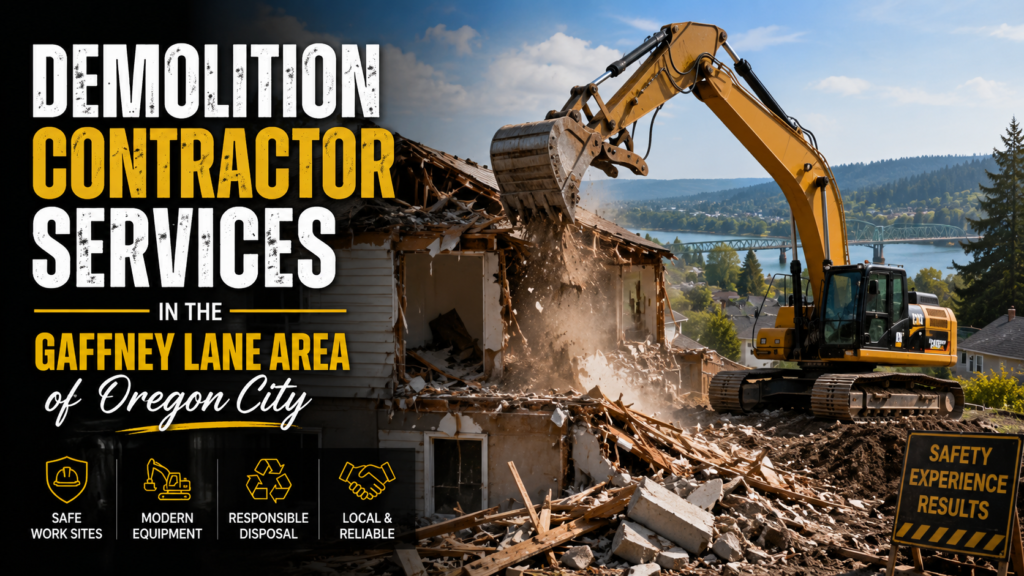
Oregon City, one of the oldest incorporated cities in the western United States and the final destination of the Oregon Trail, carries a layered history of settlement, growth, and redevelopment. The Gaffney Lane area represents one of the city’s established residential communities a neighborhood where properties range from older homes reflecting decades of prior ownership to more recently developed parcels. In this context, Demolition Contractor Gaffney Lane services play a regular role: removing structures that have reached the end of their useful life, preparing sites for renovation or new construction, and providing the technical expertise to handle regulated materials safely in accordance with Oregon’s environmental requirements.
Types of Demolition Common in the Gaffney Lane Area
Residential neighborhoods like the Gaffney Lane area of Oregon City generate a consistent range of demolition project types:
- Garage and outbuilding demolition: Detached garages, carports, and storage structures are among the most frequently demolished structures in residential neighborhoods. These projects are typically straightforward but must still comply with permit and hazardous materials requirements if the structures are of sufficient age to contain asbestos or lead paint.
- Residential home teardown: When an existing home is too deteriorated to renovate economically, or when a property is being redeveloped, full residential teardown is necessary. In Oregon City’s neighborhoods where many homes date to the mid-twentieth century, this is a recurring need.
- Interior selective demolition: Renovations frequently involve demolishing interior elements walls, flooring, ceilings, fixtures while preserving the structural shell. This selective approach requires more precision than full teardown but is governed by the same hazardous materials requirements for older structures.
- Concrete and hardscape removal: Driveways, patios, walkways, retaining walls, and other concrete features are commonly removed as part of site renovation or new development preparation.
- Deck and fence removal: Exterior structures that have weathered or been damaged are frequently removed as part of property improvement projects.
The Pre-Demolition Process in Oregon
Responsible demolition in Oregon City follows a defined pre-demolition sequence that protects workers, neighbors, and the environment:
- Hazardous materials assessment: Any structure built before 1981 should be surveyed for asbestos-containing materials (ACMs). Oregon DEQ requires notification before demolition of structures above certain size thresholds. Lead paint is present in most pre-1978 residential structures. Other regulated materials including mercury, PCBs, and various chemical products may also require assessment depending on the structure type and history.
- Utility disconnection: All utilities serving the structure must be disconnected and confirmed by the utility providers before structural demolition begins. In Oregon City, this means coordination with Portland General Electric, NW Natural Gas, the City of Oregon City water department, and applicable telecommunications providers.
- Permit application: The City of Oregon City Building Department requires a demolition permit for structural demolition. The permit process includes a review period and may require neighborhood notification for projects in certain zoning areas.
- Abatement (if required): If the hazardous materials survey identifies regulated asbestos or other materials, licensed abatement contractors must complete removal in accordance with DEQ requirements before structural demolition proceeds.
Oregon’s Asbestos Notification Requirement
Oregon’s DEQ asbestos program is one of the more comprehensive in the Pacific Northwest. State rules require that before demolition begins, the owner or operator must notify the DEQ and conduct a thorough inspection of the structure for asbestos-containing materials. For residential structures with fewer than five dwelling units the category applicable to most homes in the Gaffney Lane area the notification requirements apply when regulated ACMs are present or when the structure will be demolished by burning.
The practical implication for property owners in the Gaffney Lane area is that any home, garage, or significant outbuilding built before 1981 should be treated as potentially containing asbestos until a licensed inspector has determined otherwise. Acting on this presumption by engaging a certified inspector before demolition planning begins protects property owners from inadvertent regulatory violations and protects workers and neighbors from asbestos fiber release.
Working Respectfully in Oregon City’s Residential Neighborhoods
The Gaffney Lane area is an occupied residential neighborhood where demolition work happens in close proximity to neighboring homes, families, and community spaces. Professional demolition contractors operating in this environment apply practices that minimize the impact on the surrounding community:
- Dust and debris containment: Water suppression during demolition and appropriate containment at site boundaries prevents dust from spreading to neighboring properties.
- Noise management: Work is conducted during permitted hours and the noisiest phases are scheduled to minimize impact on residential comfort.
- Site security: Fencing, barriers, and signage protect the site and prevent unauthorized access during the project.
- Prompt debris removal: Material is removed from the site promptly rather than being allowed to accumulate, maintaining a clean and safe project appearance.
- Communication with neighbors: Advance notification of work schedules and contact information for the contractor allows neighbors to raise concerns before problems develop.
Material Recycling in Oregon City Demolition Projects
Oregon’s strong recycling culture extends into the demolition industry, and the Portland metropolitan area has excellent infrastructure for diverting demolition materials from landfill. Concrete is commonly crushed and recycled as aggregate base material. Steel and ferrous metals are recycled through established metal processing facilities. Clean dimensional lumber from older homes may have salvage value as reclaimed wood. Fixtures, cabinets, and appliances in serviceable condition can often be donated to organizations like Habitat for Humanity ReStores.
Contractors who prioritize material recovery during demolition in Oregon City reduce the environmental impact of the project, potentially reduce disposal costs, and support the regional circular economy for construction materials. Property owners can ask prospective demolition contractors about their specific material recovery practices as part of the selection process.
Conclusion
Demolition contractor services in the Gaffney Lane area of Oregon City operate within the regulatory framework established by Oregon’s DEQ, the Oregon Construction Contractors Board, and the City of Oregon City Building Department. This framework requiring hazardous materials assessment, licensed contractor engagement, and proper permit sequencing exists to protect workers, residents, and the environment. Property owners in this established neighborhood who understand these requirements and work with contractors who take them seriously can execute demolition projects that clear the way for new construction or renovation while fulfilling their legal and community responsibilities.