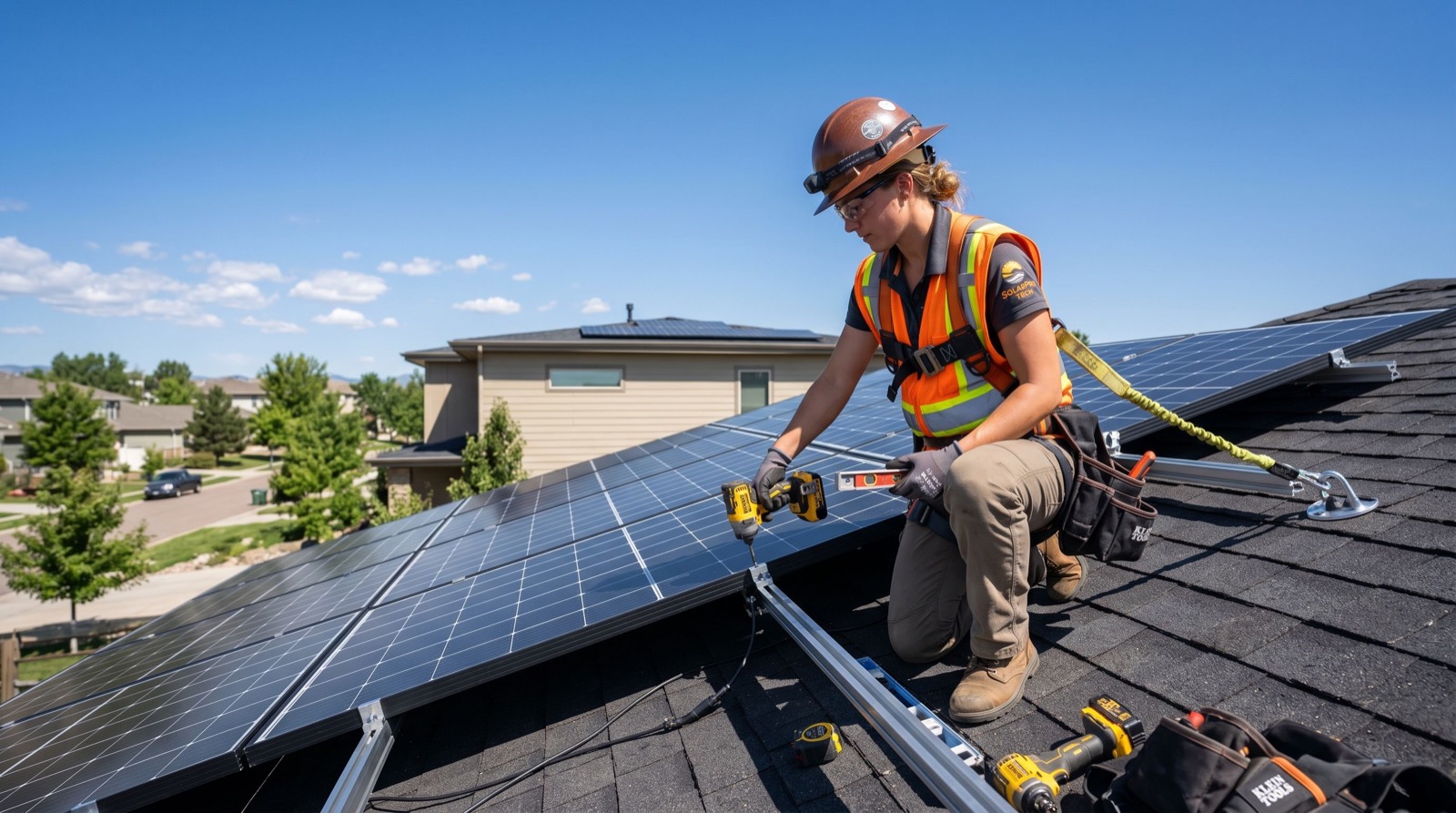

Daytime Businesses Pay the Harshest Bills — and Hold the Easiest Fix
A tailoring unit, a private school, a cold store, a dental clinic: what these businesses share is that they consume electricity almost entirely while the sun is up. Commercial tariffs in Pakistan sit well above residential rates, and once monthly consumption pushes into the higher slabs, the per-unit cost climbs steeply. That combination — expensive daytime power, heavy daytime use — is precisely the situation rooftop solar handles best, because every generated unit can be consumed on the spot, at the exact moment it is worth the most.
Yet small business owners are also the buyers most frequently oversold. Quotations arrive sized by guesswork, padded with capacity the premises will never use, and justified with payback claims that quietly assume perfect conditions forever. This article is a buying plan constructed the other way around: from your own bills outward, with the vendor’s numbers checked against yours at every stage.
Step Zero: Gather Twelve Months of Bills
Seasonality is why a single bill is worthless for sizing. A general store’s July consumption, swollen by refrigeration and fans, may run double its January figure. Collect a full year of bills and record three things from each: units consumed, the tariff category printed on the page, and maximum demand where it appears. This half-hour of homework converts you from a passive listener into a customer who can test every claim a vendor makes. When you eventually shortlist suppliers, ask each one to justify their proposed capacity against these twelve bills; the Best solar company in pakistan for your project is the one whose sizing survives that interrogation, not the one with the glossiest brochure.
Size the System in Five Steps
- Isolate daytime consumption. Estimate what share of your monthly units is used between roughly nine in the morning and five in the evening. For most shops, schools and offices it is seventy percent or more.
- Convert to a daily figure. Divide those daytime units by thirty to get a daily generation target for the system to chase.
- Apply your city’s yield. A well-installed system in most of Pakistan produces roughly four to five and a half units per kilowatt per day depending on region and season; divide your daily target by the local figure to reach a system size.
- Check the roof against the number. Each kilowatt needs roughly fifty-five to sixty-five square feet of shade-free area; verify the structure can carry the weight and that no neighbouring building throws shade across it at three in the afternoon.
- Stress-test against your slowest month. If the business shuts for a season or slows sharply, an oversized array spends those weeks exporting cheap units instead of avoiding expensive ones — a quiet drain on the return.
Payback, Stated Without Cosmetics
An honest commercial payback calculation counts only two savings streams: units self-consumed at your commercial tariff, and any net-metered surplus at the approved settlement rate, which is markedly lower. It then subtracts realistic costs: periodic cleaning, an inverter replacement somewhere within the system’s lifespan, and financing charges if the purchase is leveraged. Run this way, typical daytime-heavy businesses still see payback measured in a small number of years — which is exactly why the arithmetic deserves honesty rather than decoration. The truthful case is already strong; inflating it only manufactures disappointment later.
Financing options have widened considerably. Bank schemes for renewable installations, vendor instalment plans and leasing arrangements each reshape the cash-flow picture differently. The comparison that actually matters is monthly instalment versus monthly bill savings: when the instalment comes in lower from the first month, solar stops being a capital expense and becomes a straightforward operating-cost reduction. There is a tax dimension worth raising with your accountant as well, since a rooftop system enters the books as a depreciable business asset, and depreciation can soften the effective cost in ways a residential buyer never sees.
Do You Need Batteries at All?
For many commercial premises, the honest answer is no — or not many. A shop that operates in daylight can run directly on solar and grid together, with storage reserved for a handful of critical circuits: the till, CCTV, network equipment, perhaps an emergency light. Skipping whole-premises backup slashes the project cost and shortens payback dramatically. Businesses with genuinely critical loads, such as pharmacies with refrigerated stock or clinics with equipment that must never lose power, should size storage around those specific circuits rather than the entire distribution board.
One structural note before any contract is signed: confirm your connection type and sanctioned load early. Three-phase supply is a prerequisite for net metering, and a premises whose sanctioned load is smaller than the proposed array will need an enhancement processed first — a detail that surfaces late in careless projects and stalls them for weeks.
Geography Quietly Moves the Numbers
Solar yield is not spread evenly across the map. Balochistan’s high, dry plateau receives some of the strongest and most consistent irradiance in the country, which is why systems fitted with solar panels in Quetta can outproduce identically sized installations in more humid regions and pull payback forward accordingly. Coastal moisture, plains dust and mountain cloud each trim the figures in their own ways. A vendor who quotes the same per-kilowatt yield for every city in the country is telling you, indirectly, that they have not done the local homework.
Vet the Installer the Way You Would Vet Any Key Hire
For a business, a solar array is plant and machinery, and the installer is a contractor building it. Demand a single-line diagram before signing, not after. Ask for three commercial references you are free to telephone. Confirm in writing who handles the net metering file and what remedy applies if approval drags. Insist on itemised equipment lists with exact model numbers, so a premium brand quoted cannot become a lesser one delivered. None of this is hostile; it is ordinary procurement discipline applied to an asset that will sit on your roof for a quarter of a century. Put the after-sales terms in writing too — response time for faults, the cleaning schedule if one is included, and who pays for crane or scaffolding access should a panel ever need replacement.
That verification habit transfers across everything a family or business buys — the same instinct that steers parents toward trusted professionals for their children’s education should steer a proprietor toward installers with documented commercial track records. Buy on evidence, size from your own bills, and let the sun take over the one line item on your ledger that has only ever moved in a single direction.