Panels grab the headlines, but the battery is what decides whether your lights stay on when the grid collapses at 8 p.m. For Pakistani households and shops in 2026, choosing the right storage bank is the single most important — and most misunderstood — decision in a solar system. This guide focuses squarely on solar batteries in Pakistan: the chemistries, the sizing maths, and how to avoid the costly mistakes that leave a bank dead within two summers.
We will compare lead-acid against lithium honestly, show you how to size a bank to your real backup needs rather than a salesperson’s upsell, and explain the specs that actually govern lifespan. Get the storage right and everything upstream — panels, inverter, wiring — finally delivers the reliable, outage-proof power you paid for.
Why solar batteries in Pakistan fail early — and how to prevent it
Most premature battery deaths trace back to two culprits: the wrong chemistry for daily cycling, and a bank sized too small so it is discharged too deeply every night. Both are avoidable with a little planning.
Quality solar batteries in Pakistan now include lithium-iron-phosphate (LiFePO4) options with built-in battery management systems that protect against over-discharge, overheating, and cell imbalance. That protection is exactly what a bare lead-acid bank lacks, which is why lithium survives the punishing daily deep-cycle duty of a load-shedding country.
- Wrong chemistry — flat-plate lead-acid was never built for daily deep cycling.
- Undersizing — a small bank discharged to empty every night ages in months.
- Heat — batteries kept in unventilated, sun-baked rooms lose life fast.
- No BMS — without cell management, one weak cell drags the whole bank down.
Lithium vs lead-acid: an honest 2026 comparison
The battery aisle offers two broad chemistries, and the cheaper one is rarely the better value over time. Cost per usable kilowatt-hour across the whole life is the number that matters, not the sticker price.
Which battery chemistry is right for load-shedding?
If you cycle the bank daily to ride out outages — as most Pakistani users do — lithium wins comfortably. Its far higher cycle count and deeper usable depth mean you buy fewer replacements over a decade, and it charges faster from your midday solar peak.
| Spec | Tubular lead-acid | Lithium (LiFePO4) |
|---|---|---|
| Usable depth of discharge | ~50% | ~90% |
| Cycle life | ~1,200–1,500 | 6,000+ |
| Typical lifespan | 3–5 years | 8–12 years |
| Charge speed | Slow | Fast |
| Maintenance | Water top-ups | None |
| Cost per usable kWh (life) | Higher | Lower |
How to size a solar battery bank correctly
Sizing is simple arithmetic once you know your essential loads. List only the appliances you truly need during an outage, not everything in the house.
Add up their wattage, multiply by the hours you need backup, and add a margin for battery efficiency and depth-of-discharge limits. A typical family wanting 4–5 hours of evening backup for lights, fans, a router, and a refrigerator lands around a 5–10 kWh lithium bank.
- List essential loads: lights, fans, refrigerator, router, phone chargers.
- Sum their wattage to find total backup power draw.
- Multiply by required backup hours to get kWh needed.
- Add roughly 20–30% for efficiency and safe depth of discharge.
- Round up to the nearest standard battery module size.
Where to buy, and why the installer matters more than the badge
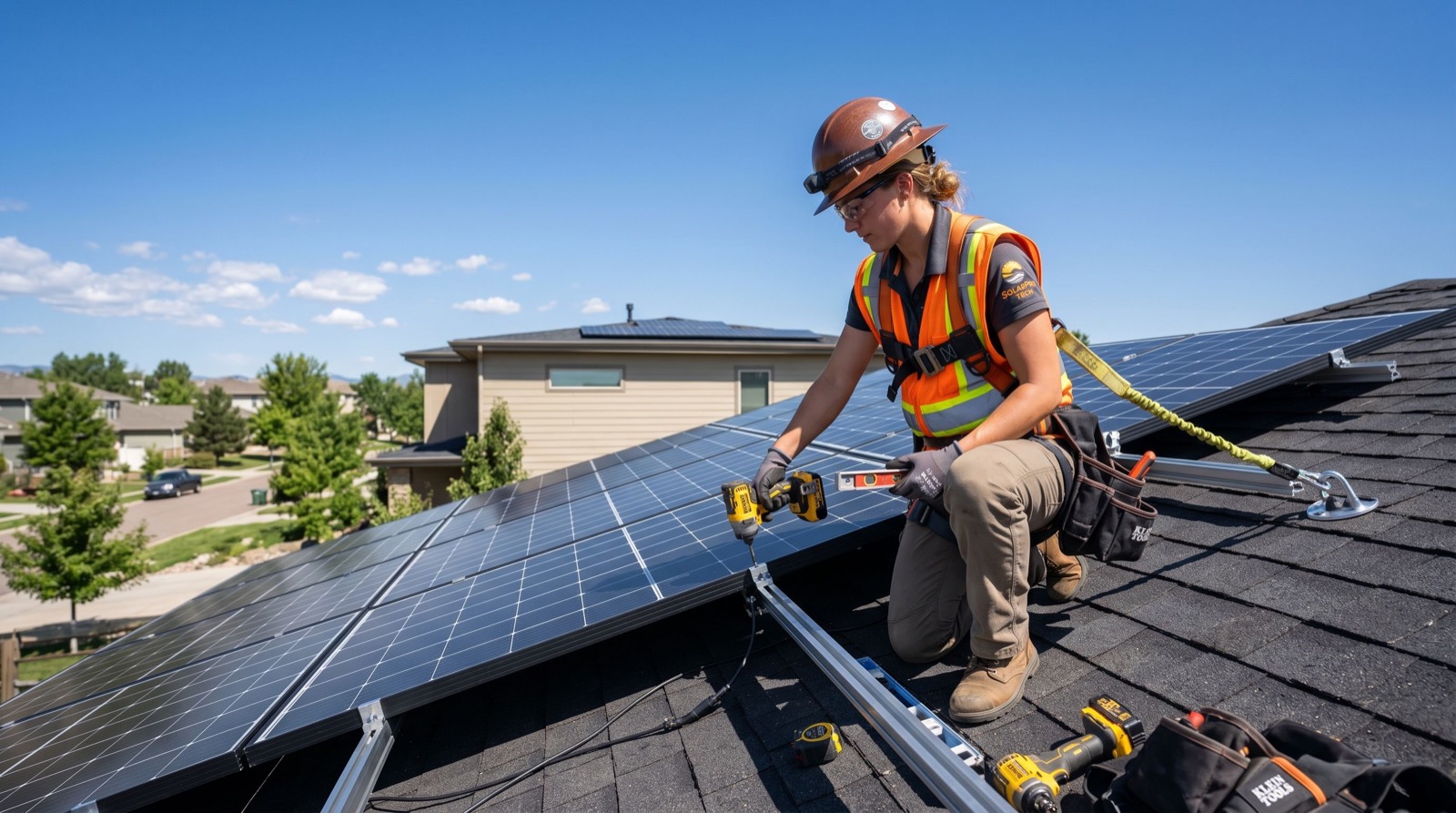
A great battery installed badly still fails. Ventilation, correct BMS configuration, matched inverter voltage, and proper cabling all decide whether your bank reaches its rated life.
Because Lahore’s summers are so severe, local expertise in thermal placement and ventilation genuinely matters. Working with an established solar company in Lahore means your bank is specified to a compatible hybrid inverter, installed in a cool ventilated spot, and backed by real after-sales support. When comparing vendors, lean toward trusted professionals who publish clear warranty terms and can show commissioned installations nearby.
Extending battery life: habits that add years
Even the best lithium bank rewards good habits. A few simple practices stretch its usable life well beyond the warranty and protect the money you invested.
Keep the battery in a cool, ventilated space away from direct sun, and avoid routinely draining it to zero — shallower daily cycles age it more gently. Let your solar array, not the grid at night, do most of the charging so the bank spends its days topped up. Firmware on modern BMS units also improves over time, so ask your installer to check for updates during annual service visits.
- Stay cool — mount in shade with airflow; heat is a battery’s biggest enemy.
- Avoid deep drains — sizing a little larger means shallower, gentler daily cycles.
- Charge from solar — top up by day so the bank rarely sits low overnight.
- Service annually — check terminals, ventilation, and BMS firmware once a year.
These habits cost nothing yet can add years of dependable service. A bank that would otherwise fade at eight years can comfortably reach eleven or twelve when treated well, dramatically lowering its true cost per usable kilowatt-hour over its lifetime.
The safety and standards angle
Battery banks store real energy, so certification and correct protection devices are not optional. A compliant install includes DC breakers, fuses, and surge protection sized to the bank.
If you plan to export surplus daytime energy, the net-metering framework is set nationally; you can read the current rules directly from the regulator at NEPRA, which publishes the 2026 regulations. A hybrid inverter that both charges your battery and exports to the grid gives you the best of both worlds — bill savings by day, backup by night.
Frequently Asked Questions
How long do solar batteries last in Pakistan’s climate?
A quality LiFePO4 bank typically lasts 8–12 years even with daily cycling, provided it is kept ventilated and not baked in direct heat. Lead-acid banks usually manage only 3–5 years under the same duty.
What size battery do I need for a small home?
For basic evening backup of lights, fans, a router, and a refrigerator, most small homes do well with a 5 kWh lithium bank. Add a second module if you also need to run a water pump or air cooler.
Can I add a battery to an existing solar system?
Yes, if your inverter is a hybrid or battery-ready model. If you have a grid-tie-only inverter, you will need to swap or add a compatible hybrid unit before wiring in storage.
Are lithium batteries safe to install indoors?
LiFePO4 chemistry is thermally stable and safe when installed with its BMS in a cool, ventilated indoor space. Avoid direct sunlight and confined hot cupboards, and use the protection devices your installer specifies.
Conclusion
The right solar batteries in Pakistan turn a good solar system into a genuinely outage-proof one in 2026 — and lithium’s lower lifetime cost, deeper discharge, and longer life make it the clear pick for daily load-shedding duty. Size the bank to your essential loads, insist on proper ventilation and a BMS, and let an experienced local installer match it to your inverter. Do that, and your evenings stay lit no matter what the grid does. Ready to price a battery bank sized to your home? Request a free storage assessment today.